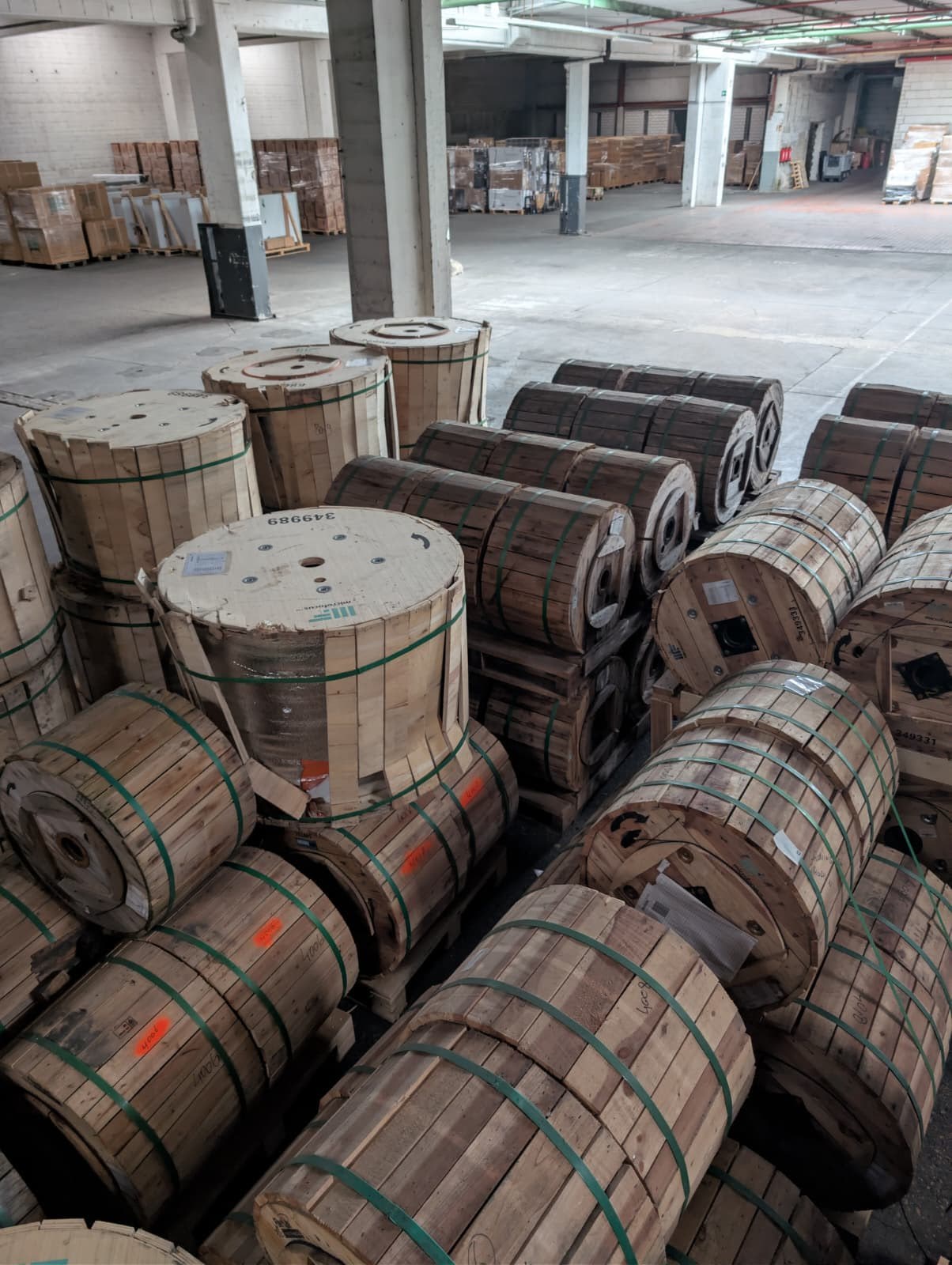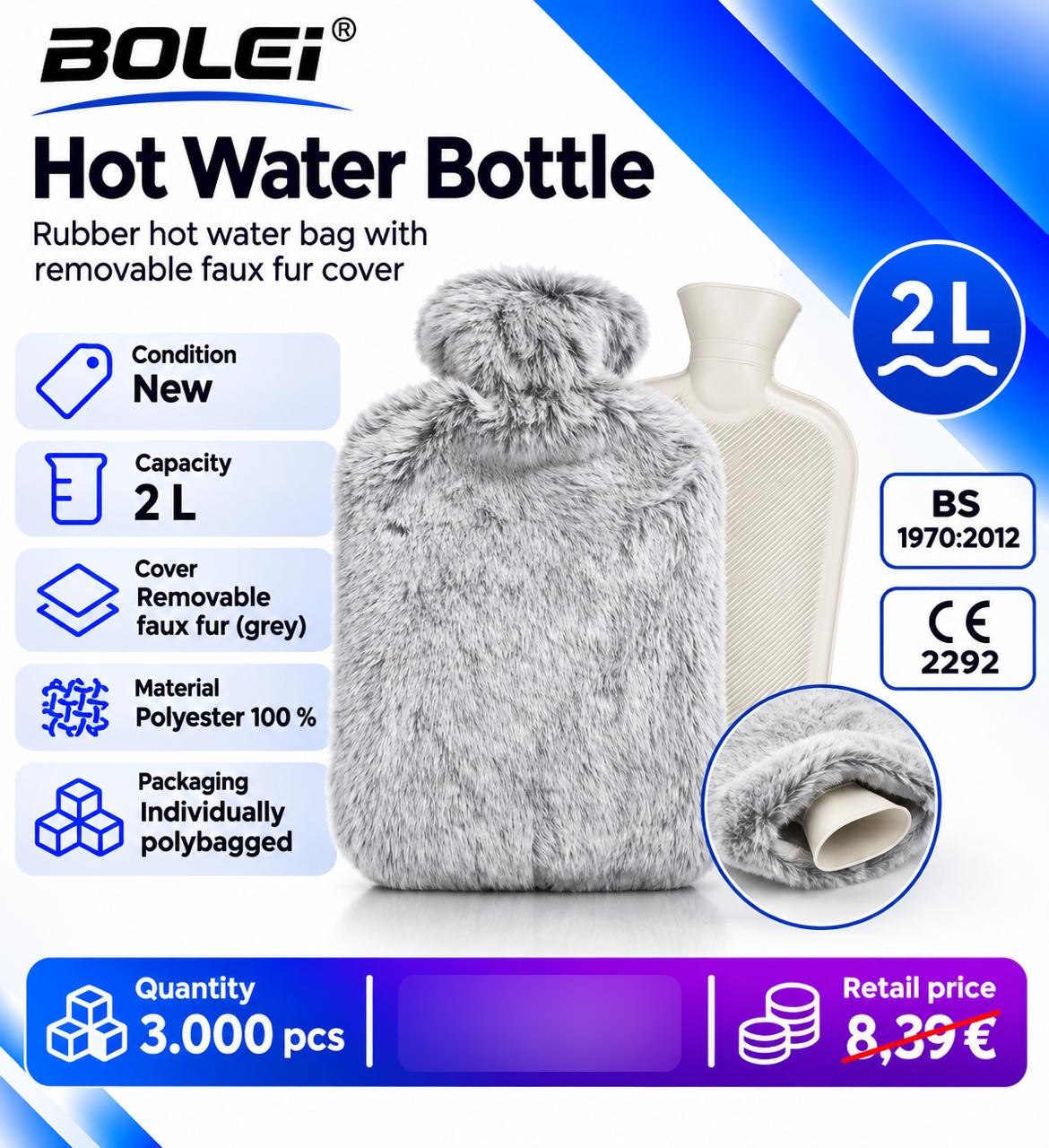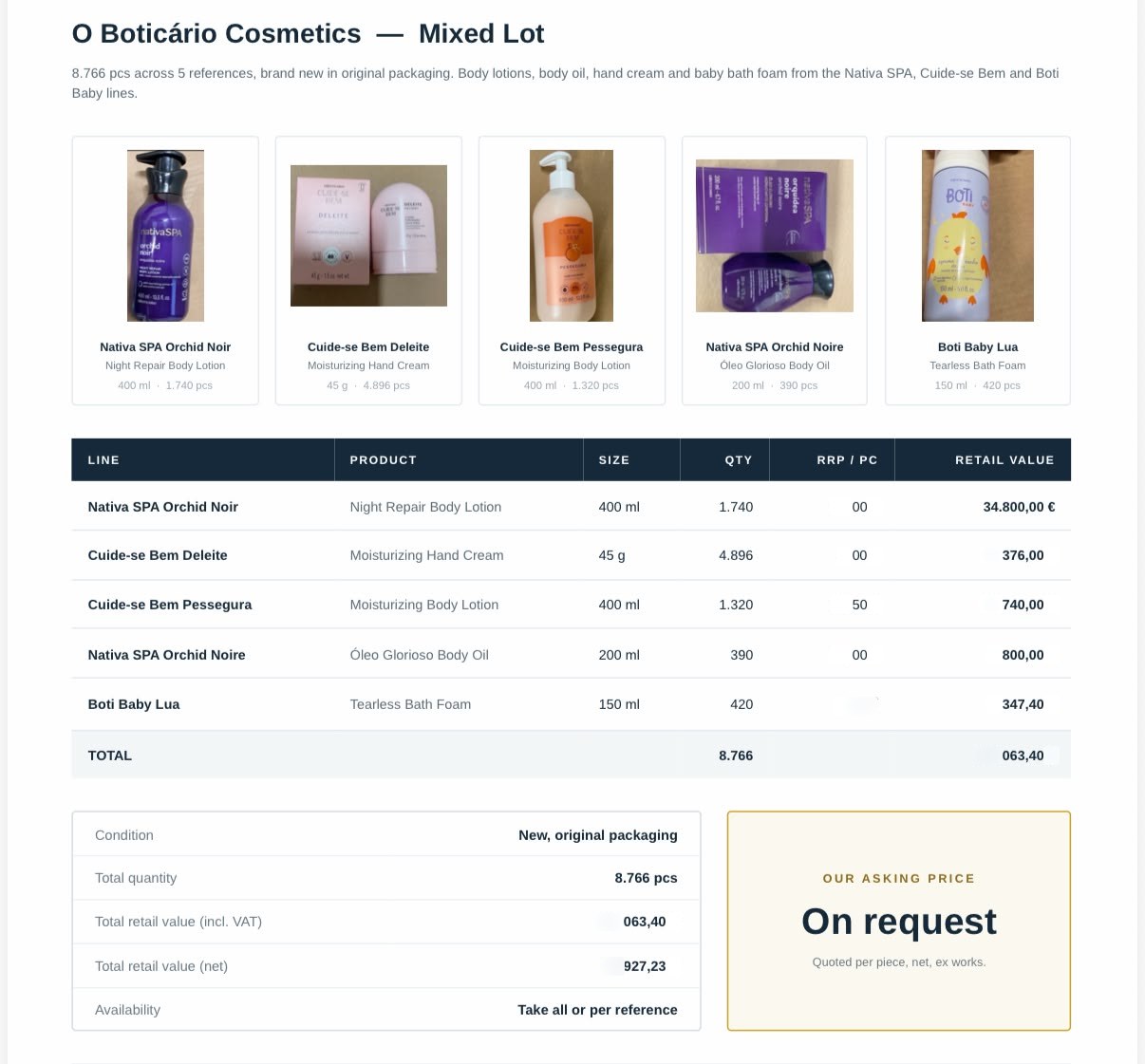
Before you enquire: calculate your maximum price
A typical mistake: you start from the asking price and see whether 'there's still something left over'. Turn the calculation round. Always work with net figures on both the buying and the selling side, that is, excluding VAT.
Step 1: Work out a realistic selling price
If you set the selling price in the example below €1 too high, you lose €368 of revenue before fees across 368 sellable units. Here's how to go about it:
- Completed sales, not listing prices: Use the sold items filters on marketplaces or your own sales history. Listing prices only show what someone would like to get.
- Compare several channels: Check two or three channels you actually sell on. Marketplaces, your own shop and wholesale buyers often deliver very different prices.
- Use a cautious figure: Take a figure from the lower end of real selling prices, not the average. With large quantities, you often have to go below market price to move the stock.
- Estimate the sell-through period: Divide the sellable quantity by your weekly sales. At 30 units a week, you need about 12 weeks for 368 units, so roughly three months. You need this period for storage and interest costs.
Step 2: Calculate your maximum price
Assumptions (fictitious example):
- Lot: 400 Bluetooth headphones
- Rejects: 8%
- Cautious selling price: €14.00 net per unit
- Platform and payment fees: 12% of revenue
- Target margin: 30% of net revenue
- Freight to you: €180
- Sellable units: 400 × 92% = 368 units. 32 units are unsellable.
- Revenue: 368 × €14.00 = €5,152.
- Fees: 12% of €5,152 = about €618. That leaves about €4,534 net revenue.
- Target margin: 30% of €4,534 = about €1,360. That leaves about €3,174.
- Freight: €3,174 minus €180 = about €2,994.
- Divide by the total number of units, because you pay for the faulty ones too: €2,994 ÷ 400 = about €7.48 maximum price per unit.
Important: the maximum price includes your target margin but not yet your follow-on costs. You pay those out of the margin. That's why the next step is to check whether the margin is enough to cover them.
Step 3: Check whether the margin covers your follow-on costs
The formula is: margin minus follow-on costs = profit. In the same fictitious example with a three-month sell-through period:
- Packaging and shipping to end customers, if not paid by the customer: 368 × €1.50 = €552
- Storage: one pallet space for three months at €20 each = €60
- Labour for sorting, photos, listing and packing: 10 hours × €25 = €250
- Tied-up capital: purchase 400 × €7.48 = €2,992. At an example interest rate of 8% a year, for instance on an overdraft facility: €2,992 × 8% × 3/12 = about €60
- Disposal of rejects: 32 × €0.50 (example figure) = €16. Faulty electrical devices don't belong in general waste. Ask your waste disposal company for the price beforehand.
- End-customer returns: consumers generally have a right of withdrawal when buying online. At an example rate of 5%, about 18 units come back; at €4 per unit, that's €72.
Total follow-on costs: €1,010. Profit: €1,360 minus €1,010 = €350. With a target margin of only 15% (about €680), you would make a loss of about €330. If sell-through takes six months instead of three, storage and interest costs double from €120 to €240, and profit falls to €230. Plug in your own costs before you set your target margin.
Step 4: Break-even for the worst-case scenario
The break-even point is the unit price at which you make neither a profit nor a loss. Unlike the maximum price, you don't include a margin here. Instead, you deduct the follow-on costs directly from net revenue.
Fictitious example with 25% rejects: 300 sellable units × €14.00 = €4,200. Minus 12% fees (€504) gives €3,696. Follow-on costs: shipping to end customers (300 × €1.50 = €450), storage (€60), labour (€250), disposal (100 × €0.50 = €50), end-customer returns (15 × €4 = €60) and tied-up capital. For tied-up capital, you use the purchase at break-even price: about €2,590 × 8% × 3/12 = about €52. Total follow-on costs: €922. That leaves €2,774. Minus freight (€180) gives €2,594. Divided by 400 units: about €6.48 break-even per unit (rounded down so you stay on the safe side).
The two figures together decide. The maximum price shows whether you reach your target in the normal case. The break-even shows whether you come out without a loss in the bad case.
- Offer at €6.00: below the maximum price and below break-even. No loss even with 25% rejects. You can buy.
- Offer at €7.20: below the maximum price but above break-even. Normally you make money; with high rejects you lose. Only buy with a working rate confirmed in writing, or negotiate.
- Offer at €8.00: above the maximum price. Negotiate or walk away.
Questions for the supplier
Ask these questions in writing so that the answers can serve as evidence later. Evasive answers are a warning sign.
- Origin: overproduction, range change, insolvency, returns or warehouse clearance?
- Contents: is there a packing list with item description, EAN and quantity?
- Condition: what does the condition grade mean at this supplier? Has it been tested, and what proportion?
- Completeness: have bestsellers been removed? Do you have to take the whole lot?
- Logistics: which country is the stock stored in? How many pallets, what weight, what dimensions?
- Labelling and shelf life: is the packaging labelled in the language of your target market? What best-before date do food, toiletries and cosmetics have, and does it apply to all batches?
- Warranty: with or without warranty? What applies if the delivery differs from the packing list?
- Invoice and charges: will you get a proper invoice made out to your company? Are there customs duties or import charges, and who pays them?
Contract clauses and warranty
Job lots are often sold without warranty or with clauses such as 'sold as seen'. Look for these specifically in the offer and the terms and conditions. If you find such a clause, calculate more cautiously and inspect the goods more thoroughly before paying, because you'll have little room to renegotiate later.
Before buying, set down in writing what applies if there are discrepancies:
- Shortfalls: a price reduction per missing unit based on the unit price, or a follow-up delivery?
- Wrong items or poorer condition: return, credit note or price reduction? Who pays the return shipping?
- Tolerance: from what level of discrepancy does the arrangement apply, for example from 2% of the quantity?
- Deadline and proof: by when do you have to report, and are photos and quantities sufficient as proof?
In Germany, alongside the contractual deadline, the statutory duty to inspect and give notice of defects under Section 377 of the German Commercial Code (HGB) generally applies between merchants. You must inspect the goods without delay after receipt and notify defects in writing immediately. If you wait too long, you can lose your rights in respect of defects. This article is not legal or tax advice. A lawyer can clarify the details of your contract.
Documents and legal matters
- Packing list or manifest: spot-check a few EANs online to confirm the model and version.
- Written offer: with quantity, condition, price, warranty arrangement, delivery terms and payment method.
- Company details: company name, address, registration entry and VAT identification number. You can check an EU VAT number using the European Commission's VIES system.
- Labelling: electrical devices, toys and certain tools and machinery need CE marking. Cosmetics don't carry a CE mark. For those, you check the responsible person in the EU, ingredients, batch number and shelf life.
With branded goods, you check whether they were placed on the market in the European Economic Area. Goods that the trade mark owner has only sold outside the EEA can't simply be resold in the EU. In Germany, there are registration obligations for electrical devices and packaged goods under electrical equipment and packaging law. Depending on your role as a trader or importer, they may apply to you yourself. Clarify this before your first import.
VAT, customs and import charges
If you buy as a German business with a valid VAT identification number from a supplier in another EU country, the supplier will usually invoice without VAT, and you account for VAT on the acquisition in Germany. Ask your tax adviser to confirm how to book this. If the goods are outside the EU, customs duties and import VAT may apply. Who pays them belongs in the offer and the Incoterm; otherwise the amount is missing from your calculation.
Photos and videos: do the goods really exist?
Catalogue images prove nothing. Ask for current images: an overall view of all pallets, close-ups of labels and rating plates, and opened boxes. With returns, you choose individual items at random; otherwise you'll only see the best ones. With food and cosmetics, the best-before date must be legible on several boxes.
A proof-of-life video with your name and the current date next to the goods tells you more than photos, because an old video can't be reused like this. On a live video call, you decide which box is opened. On request, Linquify provides photos, a proof-of-life video with the customer's name and the current date, and a live video call. If a supplier refuses both video and video call, don't buy.
Reading condition grades correctly
There's no binding standard for job lots. Ask for a written explanation of what the grade means at the supplier in question.
| Description | Typical meaning | What to look out for |
|---|---|---|
| New, original packaging | Unused, in original packaging | Older model version? Packaging suitable for the target country? |
| New, packaging damaged | Unused, box damaged or missing | Accessories complete? Use a lower selling price |
| Returns, tested | Returned goods, tested and sorted | Get the test method and working rate confirmed in writing |
| Returns, untested | Returned goods without testing | Factor in high rejects and disposal costs |
| Faulty, for spares | Not working | Only worthwhile if you can handle repairs or selling parts |
Typical mistake: you calculate untested returns with the reject rate of new stock. For lots like these, calculate the break-even with a much higher reject rate, including disposal of every faulty unit. If the offer is above that, only buy with a working rate confirmed in writing.
Securing the payment
Payment in advance is often required. You then carry the risk until the goods reach you. Depending on the supplier, you can negotiate these options:
- Deposit: part on order, the balance once the goods are ready.
- Payment after video inspection: you pay after checking the goods, ready for loading, on a live video call.
- Collection: you or your haulier inspect the goods on site, and payment is made before loading.
Before every bank transfer, check these points:
- Account holder: must match the company on the invoice.
- Account country: if the supplier is based in Germany and the account is in a completely different country, ask why.
- Changed bank details: if new bank details arrive shortly before payment, call the supplier on a number you already know. Fake payment requests with new bank details are a well-known scam.
- Payment method: cash transfers, cryptocurrency or payments to private individuals are a clear warning sign in B2B trade.
For your first deal with a new supplier, start with a smaller test purchase. That way you check the goods and their reliability before larger sums change hands.
Delivery and receiving the goods
The delivery terms belong in the offer as an Incoterm, such as EXW (you collect from the warehouse), DAP (delivery to your address, you pay import charges) or DDP (delivered duty paid, the seller pays import charges). This determines who organises transport and until when the supplier carries the risk. If you don't have a loading dock or forklift, you need a lorry with a tail lift. Say so beforehand, otherwise extra costs arise. Ask for the delivery time to be stated separately for preparation and transport. For destinations outside the EU, clarify who prepares the export documents.
On receipt, count the pallets and check them for visible damage before you sign. Note any damage or shortfalls directly on the consignment note and take photos. Without a note, a claim against the carrier becomes difficult. Then inspect the goods without delay: open samples, compare with the packing list, test functionality. Notify the seller of defects in writing immediately, with photos and quantities. So plan the inspection time before the goods arrive.
Checklist to copy
- Selling price based on completed sales, cautious figure used
- Sell-through period estimated from my weekly sales
- Net maximum price calculated (fees, target margin, freight)
- Margin minus follow-on costs gives a profit
- Break-even calculated with high rejects, offer compared against it
- Company details and VAT number (VIES) checked
- Packing list with EANs received, spot checks done
- Origin, completeness and condition grade confirmed in writing
- Warranty and arrangement for discrepancies agreed in writing
- Labelling (CE, cosmetics, best-before date) and EEA origin clarified
- VAT, customs and who pays clarified
- Video with my name and the current date, or live video call
- Account holder matches the invoice, bank details confirmed by phone
- Incoterm, pallets, weight, unloading and export documents clarified
- On receipt: damage noted on consignment note, goods inspected without delay, defects notified in writing immediately